







· By P C
Do You Really Need Organic CBD Gummies? Here's the Truth
“Organic” sounds like the magic word on a wellness label. You see it, feel reassured, and maybe reach for your wallet.
But when it comes to organic CBD gummies, the better question is: What does organic actually mean here, and what else should you check?
The honest answer is no, you do not automatically need organic CBD gummies to choose a quality hemp wellness product. Organic certification can be valuable, especially if farming practices and ingredient sourcing matter to you. But it is not the only quality marker. Transparent labeling, third-party testing, and a current Certificate of Analysis (COA) matter just as much.
Here’s how to sort through the label language without turning your shopping trip into a research project.
What “organic” can mean on a CBD label
Not every use of the word organic carries the same weight. There are three phrases you’re most likely to see:
1. USDA Certified Organic
This is the most specific and verifiable claim.
A product carrying the USDA Organic seal must meet rules established by the U.S. Department of Agriculture and be handled by certified operations. For a finished gummy, that generally means the formula, not just the hemp, must meet organic requirements.
Depending on the label category:
- 100% organic: All ingredients, aside from water and salt, are certified organic.
- Organic: At least 95% of ingredients are certified organic, with the remaining ingredients meeting specific requirements.
- Made with organic ingredients: At least 70% of ingredients are organic, but the product cannot use the USDA Organic seal.
The exact label category matters. A jar that says “made with organic hemp” is not the same as a gummy that is USDA Certified Organic.
You can learn more about the USDA’s organic standards through the USDA National Organic Program.
2. Organically grown hemp
This usually speaks to the hemp crop itself.
It may mean the hemp was grown using organic farming practices or came from a certified organic farm. That can be a meaningful sourcing detail, but it does not necessarily mean the finished gummy is certified organic.
The gummy may still include other ingredients, such as sweeteners, flavorings, pectin, oils, or coloring agents, that are not certified organic. The extraction and manufacturing process also matter.
In other words:
Organic hemp is about the plant. Certified organic gummies are about the whole product and its production chain.
That distinction is easy to miss, and worth noticing.
3. Organic as marketing language
Sometimes “organic” appears on a label without a USDA seal, certifying-agent statement, or clear explanation of what is actually certified.
That does not automatically mean the product is poor quality. It does mean you should ask a few more questions.
What part is organic? The hemp? The carrier oil? The flavoring? The complete formula? Is there documentation?
A calm little fact-check is all it takes. No detective trench coat required.
Does organic certification guarantee a better CBD gummy?
Not by itself.
Organic certification can tell you more about farming methods, prohibited inputs, and how a product was handled. It may be important if you want to prioritize organic agriculture or avoid certain synthetic inputs.
But organic certification does not replace finished-product testing.
A certified organic gummy could still have a label that does not clearly tell you how much CBD is in each piece. It may not tell you the full cannabinoid profile. It also does not remove the need to verify the final product for contaminants and manufacturing quality.
That’s where third-party testing comes in.

Why third-party testing matters just as much
A third-party lab is independent from the company selling the product. Its job is to analyze a sample and report what is actually in it.
The results should appear in a Certificate of Analysis, or COA.
For CBD gummies, a useful COA should help you confirm:
Potency
Does the gummy contain the amount of CBD listed on the label?
A COA may show CBD per serving, total CBD per package, and other cannabinoids such as THC, CBG, or CBN. This matters because consistent labeling helps you make more informed choices about how much you’re taking.
Pesticides
Organic farming rules can reduce the use of certain synthetic pesticides, but testing is still useful. Agricultural drift, soil conditions, storage, and processing can all affect the finished extract.
A pesticide panel checks for residues and shows whether they were detected.
Heavy metals
Hemp is known for absorbing substances from the soil. That can include unwanted metals such as lead, arsenic, cadmium, and mercury.
A heavy-metals panel helps show whether those substances are absent or below the lab’s reporting limits.
Residual solvents
Some extraction processes use solvents. A properly controlled process should remove them, and a COA can show whether residual solvents were detected.
Even when a brand describes its extraction method, the lab report gives you another layer of verification.
Microbial contamination
A thorough report may also test for yeast, mold, bacteria, or other microbial concerns. This is especially relevant for edible products.
The takeaway is simple:
- Organic certification tells you more about how ingredients were grown and handled.
- A COA tells you more about what was found in the tested product.
The strongest transparency comes from looking at both where applicable.
How to read an organic CBD gummy label without overthinking it
When you’re comparing products, look for these details:
Is there a real certification claim?
If a product uses the USDA Organic seal, look for the certifying agent’s name on the label. You can also search the operation through the USDA’s Organic Integrity Database.
If the label only says “organic hemp,” treat that as a sourcing statement, not proof that the complete gummy is certified organic.
Is the ingredient list easy to find?
A clear ingredient list should tell you what you’re eating, including sweeteners, flavors, oils, and other additions.
“Plant-based wellness products” can still contain a range of ingredients. Plant-based does not automatically mean organic, and organic does not automatically mean free from every ingredient you may prefer to avoid.
Is the COA for the exact product or batch?
A general company-wide lab report is less useful than a report tied to the specific product and lot number in your hand.
Look for:
- Product name
- Batch or lot number
- Testing date
- Independent laboratory name
- Cannabinoid potency
- Pesticide results
- Heavy-metal results
- Residual-solvent results
- Microbial results, when available
If the report is difficult to find, that is a fair reason to contact the brand and ask. A transparent company should be comfortable sharing it.
What this looks like when you shop Peachy Earth
At Peachy Earth, third-party lab testing is part of how we help customers shop with more confidence. Our product pages include COA links where available, and our team can help if you cannot find the report you’re looking for.
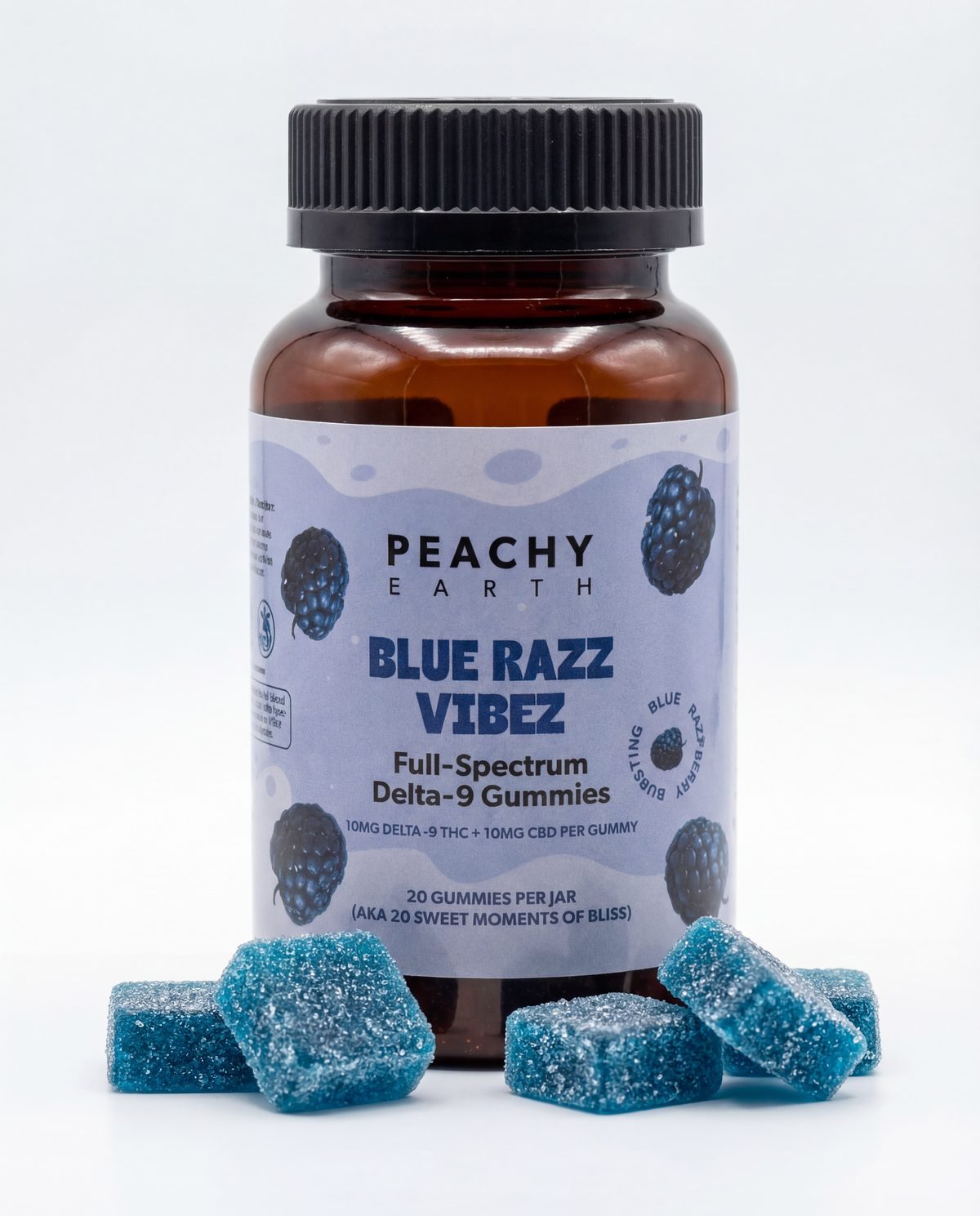
For example, the Blue Razz Vibes product page identifies the cannabinoid amounts per gummy and links to a product-specific COA. It is a Delta-9 product with CBD, not a CBD-only gummy, which is exactly why checking the cannabinoid profile matters.
Our full-spectrum CBD tincture page also explains its hemp sourcing and links to a COA. The same basic shopping habit applies across hemp wellness products: check the ingredients, check the cannabinoid profile, and check the testing.
You can browse the Peachy Earth CBD gummies collection at your own pace. Open the product details, look for the information that matters to you, and reach out if you have a question.
No pressure. Just better information.
So, do you really need organic CBD gummies?
Maybe, but not necessarily.
Organic CBD gummies may be the right fit if:
- You specifically prioritize certified organic agriculture.
- You want organic ingredients throughout the formula.
- The product provides clear certification details.
- The price and availability work for your routine.
A non-certified product may still be a thoughtful choice if it offers:
- A complete ingredient list
- Accurate cannabinoid information
- Batch-specific third-party testing
- COAs covering potency and contaminants
- Clear, approachable customer support
The best product is not always the one with the biggest front-label claim. It’s the one that gives you enough reliable information to make a choice that feels comfortable.
A quick note on responsible use
CBD gummies are for adults 21 and over. Read the label carefully, especially if the product contains THC or other cannabinoids.
If you’re new to edibles, starting with a lower amount and waiting before taking more can help you understand how the product feels for you. Edibles may take time to kick in, so patience is part of the routine. Avoid driving or operating machinery after using cannabinoid products, and avoid combining them with alcohol.
If you take medication, have a health condition, are pregnant or breastfeeding, or simply have questions about whether CBD is appropriate for you, talk with a qualified healthcare professional first. CBD is not a cure or treatment for a medical condition, and “natural” does not mean risk-free.
The bottom line
“Organic” can be a helpful quality signal, but it is not the whole story.
Look past the buzzword and check what the label actually says. Is the hemp certified, or only described as organically grown? Is the full gummy formula organic? Is there a current COA for the batch? Does it show potency, pesticides, heavy metals, and residual solvents?
A little transparency goes a long way.
And if you’re curious, take a relaxed look through our CBD gummies collection. Good wellness shopping should feel informed, not intimidating. 🍑