






· By P C
CBD vs. CBN for Sleep: What's the Difference?
You finally make it to bed, turn off the lights, and… your brain schedules a surprise 2 a.m. meeting.
If that sounds familiar, you’ve probably seen CBD and CBN mentioned as options for a calmer nighttime routine. But what’s the difference between them? And is one actually better for sleep?
The short answer: CBD and CBN are different cannabinoids with different research behind them. CBN currently has more direct evidence for reducing nighttime awakenings, while CBD may be more helpful when stress, tension, or anxious thoughts are getting in the way of rest.
Neither one is a guaranteed sleep solution, and neither should be treated as a cure for insomnia. Still, understanding the basics can help you shop more thoughtfully and build a nighttime routine that feels right for you.
A quick note: This article is for adults 21 and over and is educational only. Talk with a qualified healthcare professional before using cannabinoids, especially if you take medication, are pregnant or breastfeeding, or have an ongoing health condition.
CBD and CBN: The quick difference
CBD stands for cannabidiol, while CBN stands for cannabinol. Both are cannabinoids found in the cannabis plant, and both interact with the body’s endocannabinoid system.
Here’s the simple version:
| CBD | CBN | |
|---|---|---|
| Full name | Cannabidiol | Cannabinol |
| Intoxicating? | Generally considered non-intoxicating | Usually described as minimally intoxicating |
| Research | More widely studied overall | Less studied, but growing interest in sleep |
| Sleep connection | May support relaxation when stress is involved | May be more relevant to nighttime awakenings |
| Long-term sleep data | Still limited | Even more limited |
CBD is often associated with calm, balance, and everyday relaxation. CBN has developed a reputation as the “sleepy” cannabinoid, but that nickname is a little too simple. The science is still developing, and CBN does not automatically work the same way for everyone.
What does the research say about CBD for sleep?
CBD has been studied more extensively than CBN, but much of the research is not specifically about insomnia. Some studies look at CBD in relation to anxiety, pain, or general well-being, with sleep improvement appearing as a secondary outcome.
That distinction matters.
If stress or anxious thoughts are keeping you alert, CBD may support a more relaxed state that makes it easier to settle into your evening. But CBD is not a sedative in the traditional sense, and some people may find that it feels neutral: or even a little alerting: depending on the product, amount, timing, and their own body.
A 2023 randomized controlled trial published through PubMed followed adults experiencing sleep disturbance who used low-dose CBD or formulations containing CBD, CBN, CBC, and/or melatonin. All groups reported improvements in sleep disturbance over the study period, but the CBD formulations did not significantly outperform one another. The study also found that low-dose CBD did not outperform 5 mg of melatonin.
That’s useful information, even if it isn’t the dramatic answer some product pages promise. CBD may fit into a relaxing nighttime routine, but current research does not establish it as a reliable stand-alone treatment for insomnia.
What about CBN for sleep?
CBN is a minor cannabinoid that can form as THC ages and breaks down. It has historically been associated with older cannabis because of this relationship, which helped create the idea that CBN is naturally “sleepy.”
The reality is more nuanced.
Older research on CBN and sleep was limited, and some early studies suggested that CBN alone had little effect on sleepiness. Newer research is adding a bit more detail.
In a double-blind, randomized, placebo-controlled study, adults with poor self-rated sleep used 20 mg of CBN nightly for seven nights. Compared with placebo, the CBN group experienced:
- Fewer nighttime awakenings
- Lower overall sleep disturbance
- No significant increase in daytime fatigue
The study did not find significant improvements in how quickly participants fell asleep, how long they stayed asleep after waking, or overall sleep quality at conventional statistical significance levels. It also found that adding CBD did not clearly improve CBN’s effects.
So, the most accurate way to describe CBN is this: early human research suggests it may be helpful for sleep maintenance, particularly if waking up during the night is your biggest frustration. That is different from saying CBN will knock you out or solve every sleep problem.
More research is needed, especially research that follows people for longer than a few weeks.

CBD vs. CBN: Which may be a better fit?
There isn’t one universal winner. Your reason for having trouble sleeping matters.
CBD may make sense when stress is the issue
CBD may be worth exploring as part of a wind-down routine if your evenings are filled with:
- Racing thoughts
- Everyday stress
- Physical tension
- Difficulty switching from work mode to rest mode
Its potential role is often indirect: a calmer evening may create better conditions for sleep.
That does not mean CBD treats anxiety, pain, or insomnia. It simply means some adults use it as one part of a broader relaxation ritual.
CBN may be interesting when waking up is the issue
CBN has the more relevant early evidence if your main complaint is waking up repeatedly throughout the night.
That said, the research is still limited. There are no universally established, research-based dosing guidelines for CBN, and individual experiences can vary. A product that works well for one person may not feel the same for another.
CBD and CBN together are not automatically better
“More cannabinoids” sounds appealing, but bigger ingredient lists do not always mean better results.
The current research does not show a clear sleep advantage for CBD-and-CBN combinations over either cannabinoid alone. In the CBN trial mentioned above, adding CBD did not enhance the results. Another large trial also found no significant benefit from adding low-dose CBN to CBD formulations.
A thoughtful formula, clear labeling, and consistent use matter more than a crowded ingredient panel.
Why third-party testing matters
CBD and CBN products can vary widely. Two products with similar front-label claims may contain different cannabinoid amounts, ingredients, or contaminants.
That’s why third-party testing is one of the most important things to look for when shopping.
A current certificate of analysis, or COA, can help you check:
- Whether the cannabinoid amount matches the label
- Whether the product was tested for potency
- Whether it passed purity screening
- Whether pesticides, heavy metals, solvents, or microbes were detected
- Whether the product contains THC or other cannabinoids
At Peachy Earth, we review laboratory reports for potency and purity so you can shop with greater confidence. For example, our Full Spectrum CBD Tincture includes a link to its lab report.
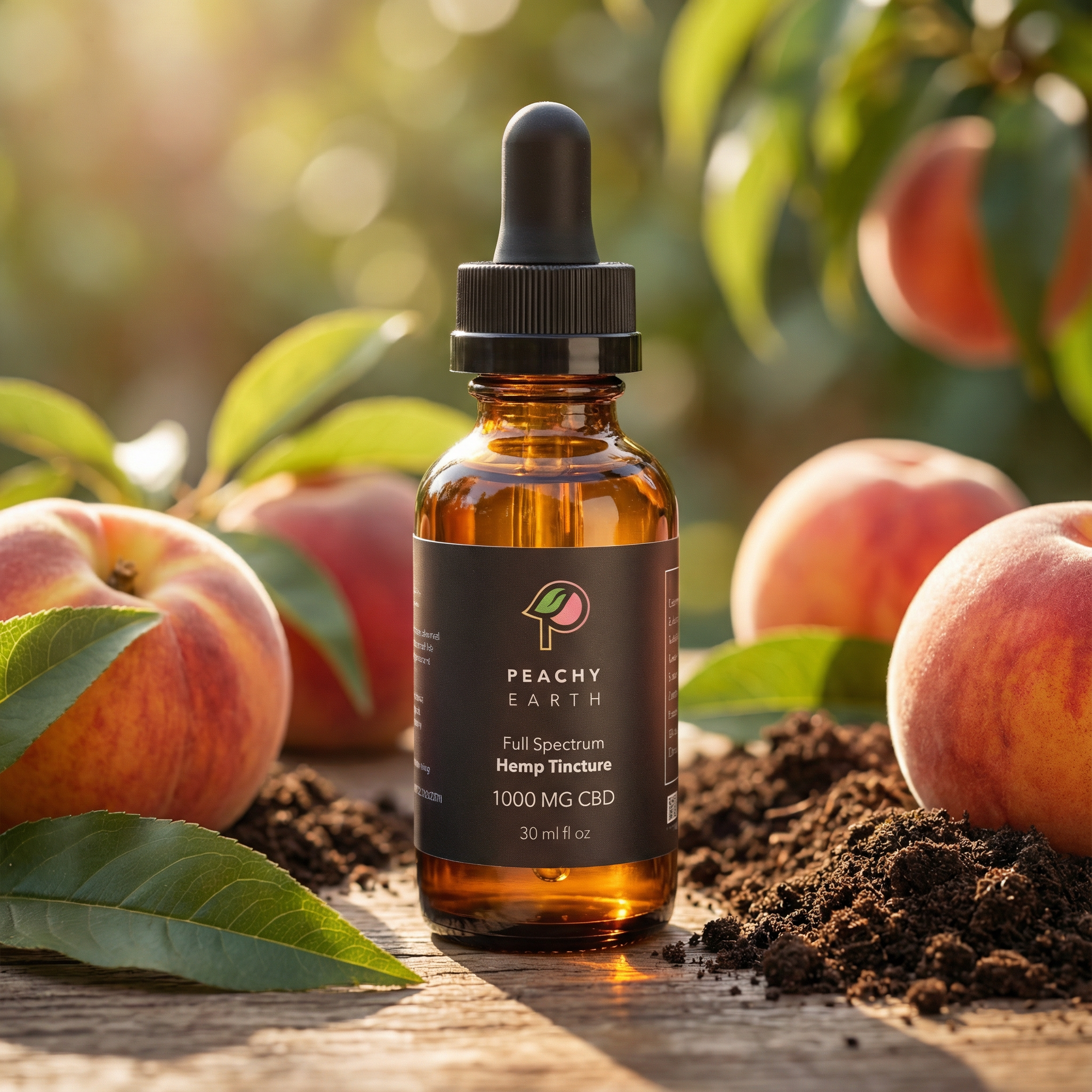
Our tincture is a CBD product, not a CBN product, and it is made with full-spectrum hemp extract. Full-spectrum products may contain trace amounts of THC, so always review the product label and COA: particularly if you are subject to drug testing.
Transparency first. Good vibes second.
How to approach a CBD or CBN nighttime routine
Think of cannabinoids as one possible piece of the evening: not the entire puzzle.
A calmer routine might include:
- Keeping your bedtime and wake-up time fairly consistent
- Dimming bright screens and lights before bed
- Finishing caffeine earlier in the day
- Making your bedroom cool, dark, and comfortable
- Taking time to journal, stretch, read, or listen to quiet music
- Trying one new wellness product at a time so you can notice how it feels
If you decide to try CBD or CBN, start with the product’s serving guidance and avoid changing several parts of your routine at once. Give yourself time to observe your response rather than expecting an instant transformation.
Avoid combining cannabinoids with alcohol or other sleep-promoting substances without professional guidance. CBD may also interact with certain medications because of how it is processed in the liver. When in doubt, ask your healthcare professional before trying it.
And if sleep problems are frequent, severe, or affecting your daytime life, it’s worth discussing them with a doctor. Ongoing insomnia can be connected to stress, medication, sleep apnea, mood changes, or other health concerns. A consistent sleep schedule and evidence-based support such as cognitive behavioral therapy for insomnia, or CBT-I, have stronger clinical support than CBD or CBN alone.
The bottom line
So, CBD vs. CBN for sleep: what’s the difference?
- CBD is better studied overall and may support relaxation when stress or tension affects your evenings.
- CBN has newer, more direct evidence for reducing nighttime awakenings, but the research is still early and short-term.
- Neither cannabinoid is proven to treat insomnia.
- CBD and CBN combinations are not automatically more effective.
- Third-party lab testing helps you verify potency and purity before you buy.
The best choice depends on what your nights actually feel like: and how thoughtfully you approach the product.
At Peachy Earth, we’re here to keep hemp wellness education clear, approachable, and free of unnecessary mystery. Explore our CBD collection, browse the Peachy Blog, or learn more about us.
A little more calm. A little less guesswork. That’s a pretty good place to start.